KNOW YOUR HEART RISK.
PROTECT YOUR LIFE.
Find The Screening That Fits You
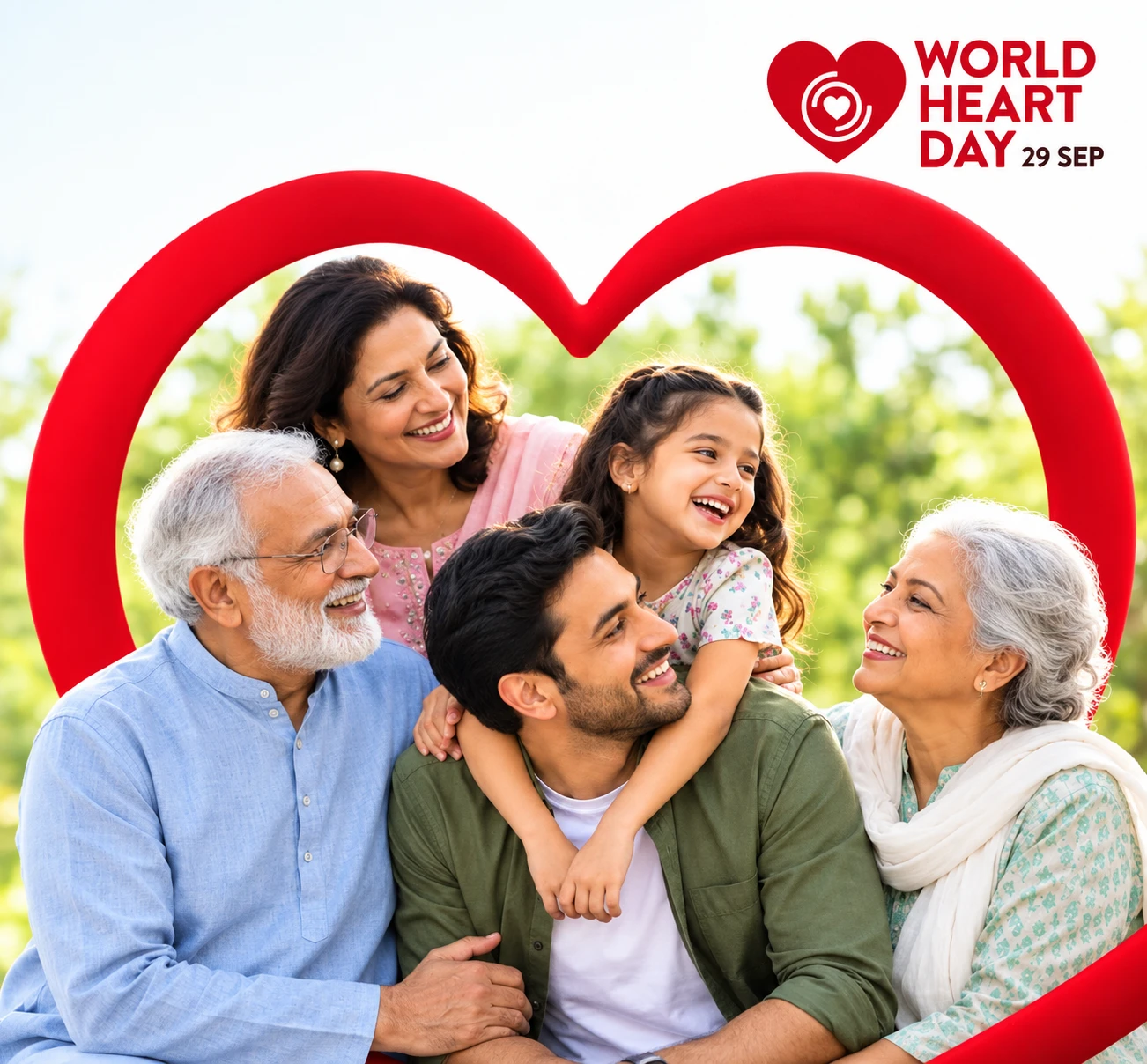
Basic Heart Health Screening
An easy first step understanding your heart health.
- ✓ Blood Pressure
- ✓ Weight
- ✓ Height
- ✓ Physician Consultation
- ✓ CBC
- ✓ Fasting Blood Sugar
- ✓ Lipid Profile
- ✓ Serum Creatinine
- ✓ ALT / SGPT
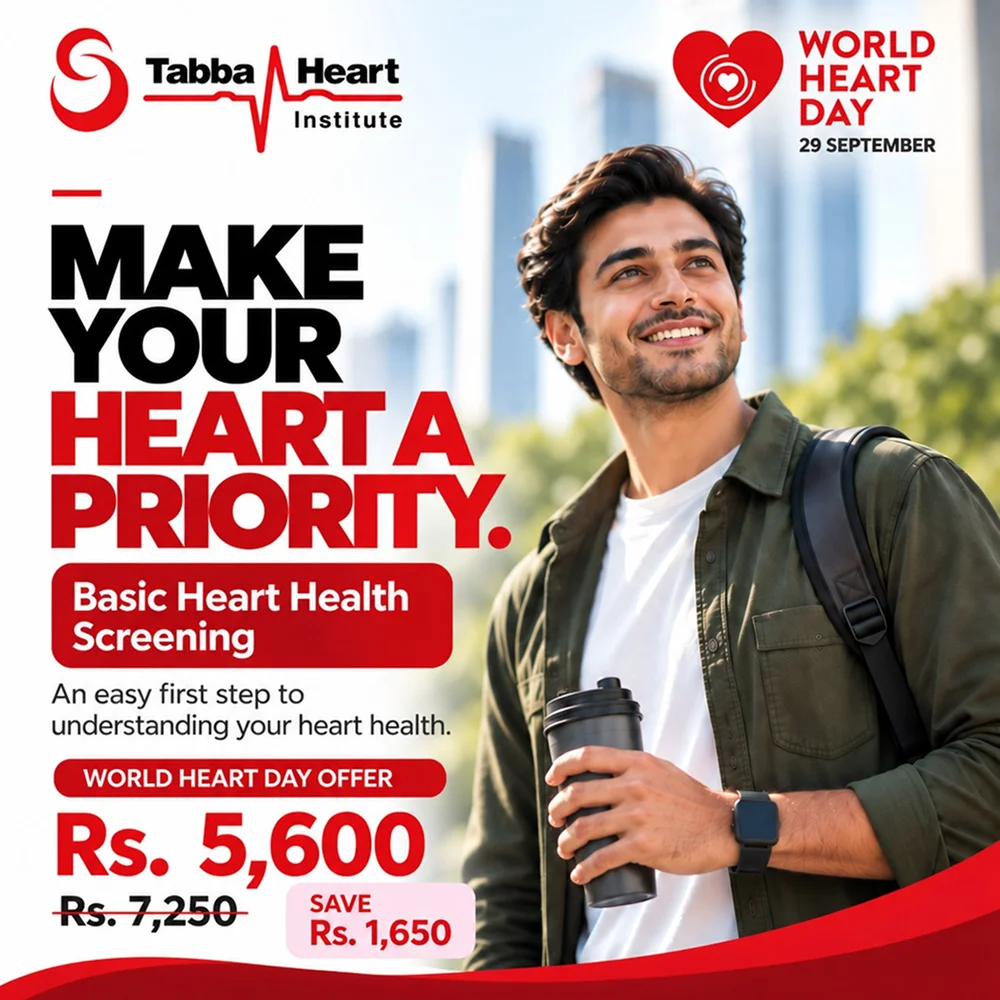
Essential Heart Health Screening
For young professionals & adults establishing a preventive health baseline.
- ✓ Blood Pressure
- ✓ Weight
- ✓ Height
- ✓ BMI
- ✓ Physician Consultation
- ✓ CBC
- ✓ HbA1c
- ✓ Lipid Profile
- ✓ Serum Creatinine
- ✓ ALT / SGPT
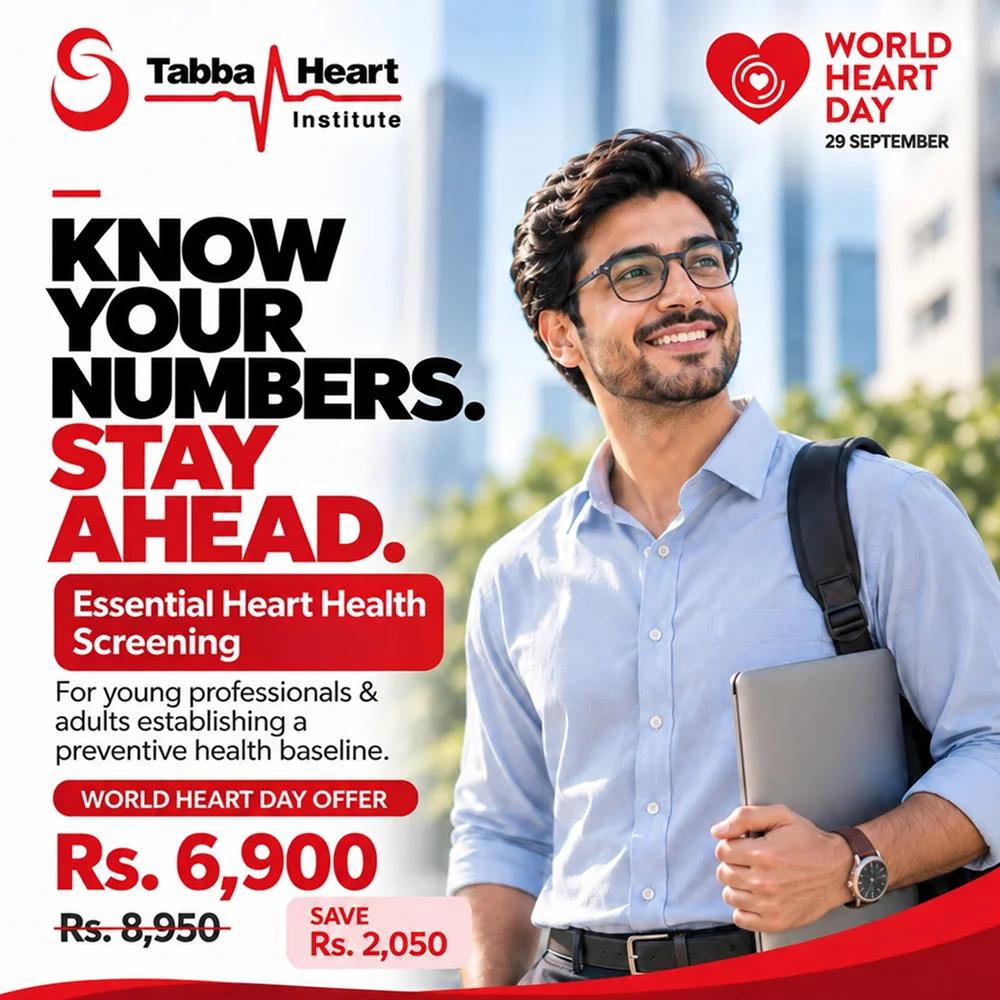
Family Heart Health Screening
For people with a family history of heart disease.
- ✓ Blood Pressure
- ✓ Weight
- ✓ Height
- ✓ BMI
- ✓ Physician Consultation
- ✓ CBC
- ✓ HbA1c
- ✓ Lipid Profile
- ✓ Serum Creatinine
- ✓ ALT / SGPT
- ✓ Screening Echo
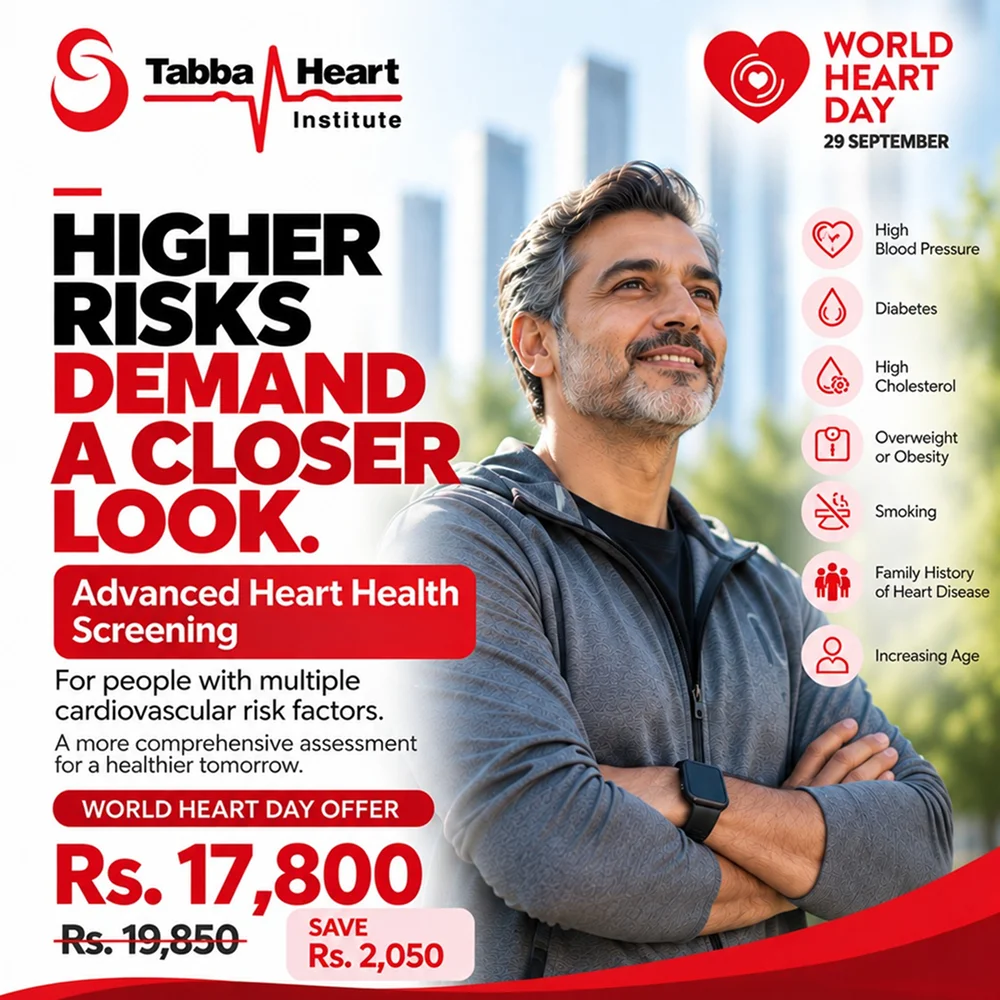
Advanced Heart Health Screening
For people with multiple cardiovascular risk factors.
- ✓ Blood Pressure
- ✓ Weight
- ✓ Height
- ✓ BMI
- ✓ Physician Consultation
- ✓ CBC
- ✓ HbA1c
- ✓ Lipid Profile
- ✓ Serum Creatinine
- ✓ ALT / SGPT
- ✓ Screening Echo
- ✓ Coronary Calcium Scoring
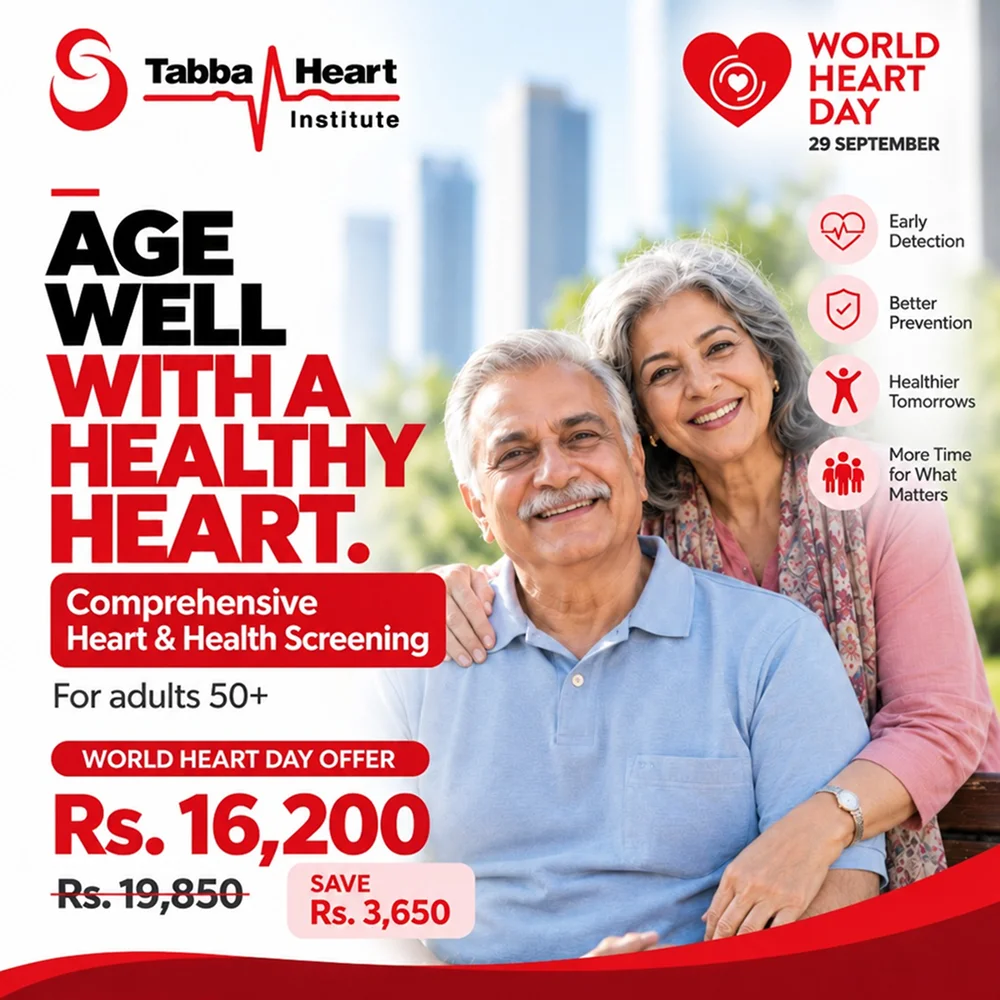
Comprehensive Heart & Health Screening
For adults 50+
- ✓ Blood Pressure
- ✓ Height
- ✓ Weight
- ✓ BMI
- ✓ Physician Consultation
- ✓ CBC
- ✓ HbA1c
- ✓ Lipid Profile
- ✓ Serum Creatinine
- ✓ ALT/SGPT
- ✓ Urine Routine Examination
- ✓ Anti-HCV
- ✓ HBsAg
- ✓ TSH
- ✓ ECG
- ✓ Screening Echo
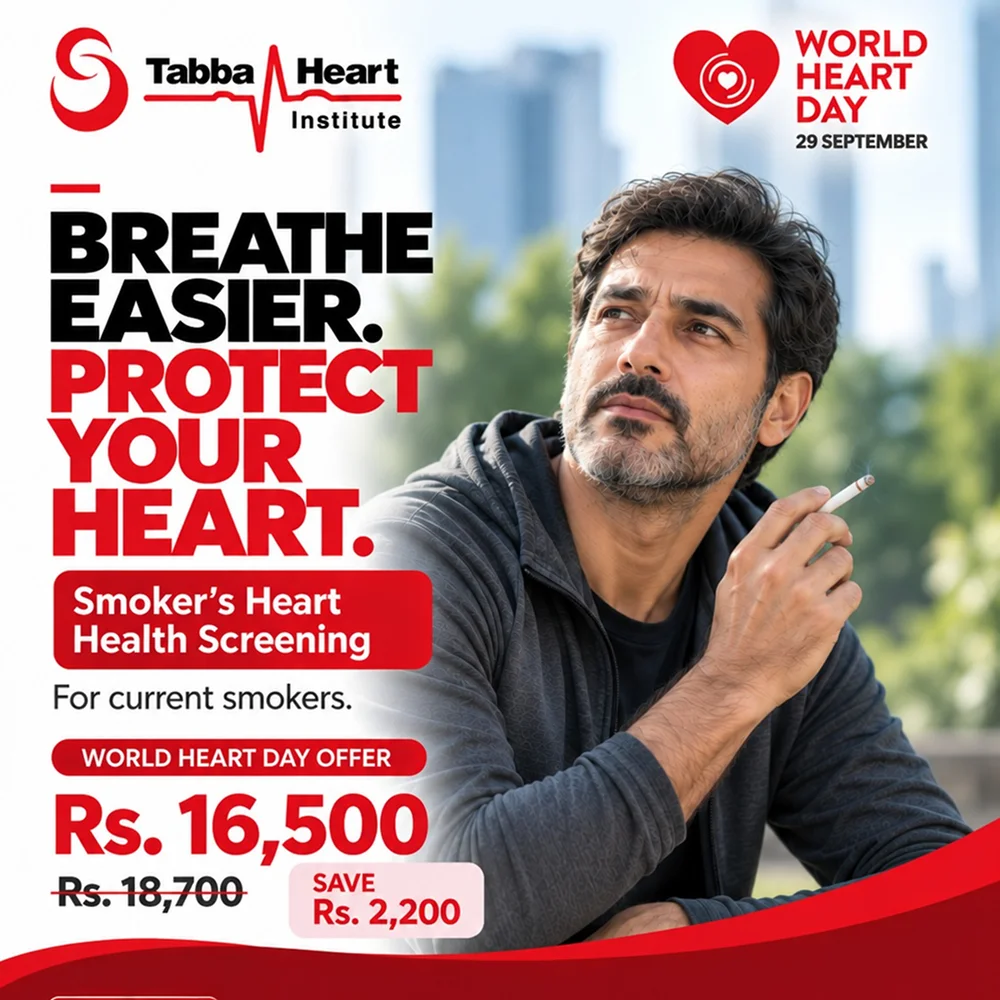
Smoker’s Heart Health Screening
For current smoker’s.
- ✓ Blood Pressure
- ✓ Height
- ✓ Weight
- ✓ BMI
- ✓ Physician Consultation
- ✓ Smoking Cessation Counselling
- ✓ CBC
- ✓ HbA1c
- ✓ Lipid Profile
- ✓ Serum Creatinine
- ✓ ALT/SGPT
- ✓ ECG
- ✓ Calcium Scoring
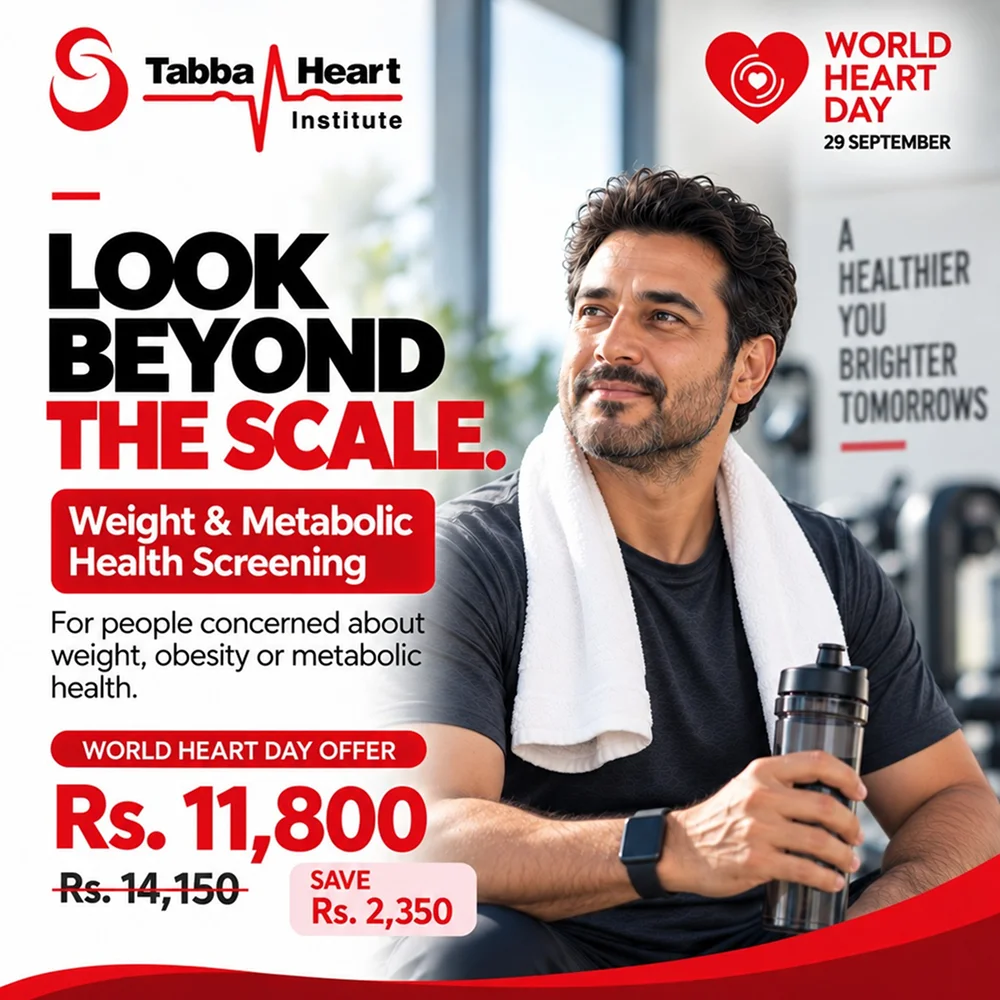
Healthy Weight & Metabolic Health Screening
For people concerned about weight, obesity or metabolic health.
- ✓ Blood Pressure
- ✓ Height
- ✓ Weight
- ✓ BMI
- ✓ Visceral Body Fat
- ✓ Physician Consultation
- ✓ Dietician Consultation
- ✓ CBC
- ✓ HbA1c
- ✓ Lipid Profile
- ✓ Serum Creatinine
- ✓ ALT/SGPT
- ✓ Urine Routine Examination
- ✓ Screening Echo
Women's Heart & Health Screening
For women of all ages.
- ✓ Blood Pressure
- ✓ Height
- ✓ Weight
- ✓ BMI
- ✓ Physician Consultation
- ✓ CBC
- ✓ Fasting Blood Sugar
- ✓ HbA1c
- ✓ Lipid Profile
- ✓ Serum Creatinine
- ✓ ALT/SGPT
- ✓ Urine Routine Examination
- ✓ TSH
- ✓ Anti-HCV
- ✓ HBsAg
- ✓ Screening Echo

Diagnostic Screening Package - A
- ✓ ETT
- ✓ Echocardiography
- ✓ Calcium Scoring
WORLD HEART DAY PRICE
Rs. 21,390
WORLD HEART DAY PRICE
Rs. 13,840
Package names, inclusions and prices use the supplied World Heart Day 2026 workbook. Confirm final campaign validity and operational details before publication.
YOU'RE IN THE RIGHT PLACE.

- UNDERSTAND YOUR RISK: Explore measurable factors, habits and background risks.
- CHECK YOUR RISK FACTORS: Use the interactive awareness checker.
- FIND YOUR SCREENING: Compare all 8 packages and savings.

YOUR HEART IS TALKING.ARE YOU LISTENING?
Check
Know your numbers.
Move
Bulld regularly activity.
Eat
Choose a healthier Pattern.
Don't Smoke
Protect Your from Tobacco.
Manage Stress
Support Healthy Coping.
KNOW YOUR NUMBERS.
Blood Pressure
How strongly blood pushes against artery walls.
Tap to Learn More
High blood pressure can be silent and can increase cardiovascular risk.
What to do ?
Have it checked regularly and discuss readings with a healthcare professional.
Blood Sugar
A window into metabolic health.
Tap to Learn More
Persistently high blood glucose is associated with increased cardiovascular risk.
Know your blood sugar when advised.
Cholesterol
Blood lipids help complete the risk picture.
Tap to Learn More
Why it Matters?
Unhealthy lipids can contribute to plaque build-up in arteries.
Ask your clinician when a lipid profile is appropriate.
Weight & BMI
One measure of metabolic health.
Tap to Learn More
Overweight and obesity can increase cardiometabolic risk.
BMI is one measure; waist, activity, diet and other factors matter too.
Know Your Heart Health Factors
Enter a few key figures and habits. The result is an awareness guide, not a medical diagnosis.
Risk Calculator
Enter your details below to get a simple educational awareness score.
This is a transparent educational awareness checker, not a validated clinical cardiovascular risk calculator, medical probability or diagnosis.
Know Your Heart Risk
YOUR NUMBERS
YOUR HABITS
See. Listen. Learn.
Preventive Heart Checkup
Small Lifestyle Changes
Know the Warning Signs

Eat For Your Heart
More nourishing foods. Less excess. Better balance. WHO guidance identifies a healthy diet as a foundation for preventing cardiovascular and other noncommunicable diseases.
Check
Know your numbers.
Move
Build regularly activity.
Don't Smoke
Protect Yourself from Tobacco.
Manage Stress
Support Healthy Coping.
Ask
Quick answers.
Myths Vs Facts
Tap your answer. Reveal the explanation. Keep learning.
FAQs
Can heart problems exist without obvious symptoms?
Yes. Some cardiovascular risk factors and underlying disease can exist without obvious symptoms. A heart attack or stroke may sometimes be the first sign of underlying disease.
Can high blood pressure have no symptoms?
Can being slim still mean I have heart risk?
Yes. Weight is only one part of cardiovascular risk. Blood pressure, blood sugar, cholesterol, smoking, activity and family history also matter.
Can heart disease risk be reduced?
I'm young. Do I need to think about heart health?
Does high cholesterol cause symptoms?
Can women have different heart-attack symptoms?
Should I wait for symptoms before screening?
TURN AWARENESS INTO ACTION.
Choose the next step that fits you today.
I WANT TO KNOW MORE
WATCH & LEARN
Short visual education and practical heart-health guidance.
I WANT TO GET CHECKED
CHOOSE A SCREENING
Don't Ignore The Warning Signs
Heart disease symptoms vary. Chest discomfort, shortness of breath, sudden sweating, dizziness and other concerning symptoms need prompt attention.
Pressure, squeezing, fullness or pain.
With or without chest discomfort.
Feeling faint, nauseated or dizzy.
DON’T WAIT.
SEEK EMERGENCY MEDICAL CARE.
24/7 CARDIAC EMERGENCY

Experience Matters
Established in 2005, Tabba Heart Institute describes itself as a leading tertiary-care cardiac hospital providing comprehensive cardiovascular care from prevention and diagnostics through intervention, cardiac surgery, rehabilitation and emergency cardiac care